Bridle Trails Equestrian Homes: What Buyers Should Know
If you picture horse property as a simple upgrade from a standard backyard, Bridle Trails can be a surprise. This Bellevue-area neighborhood offers a rare mix of wooded lots, trail culture, and equestrian history, but not every home in Bridle Trails is actually set up for horses. If you are thinking about buying here, it helps to know what makes an equestrian property practical, legal, and worth the upkeep. Let’s dive in.
Bridle Trails has a distinct identity on the Eastside. Bellevue’s 2024 subarea plan describes it as a primarily residential area with large lots, strong equestrian roots, and a policy focus on preserving its rural, horse-oriented character.
Lot sizes here range from about 10,000 square feet to several acres. The neighborhood also includes a mix of detached homes and some attached housing along 148th Avenue NE, which means the name “Bridle Trails” covers a wider range of property types than many buyers expect.
That matters because a Bridle Trails address does not automatically mean horse-ready land. Some buyers are drawn to the privacy, trees, and semi-rural feel, even if they have no plans to keep horses.
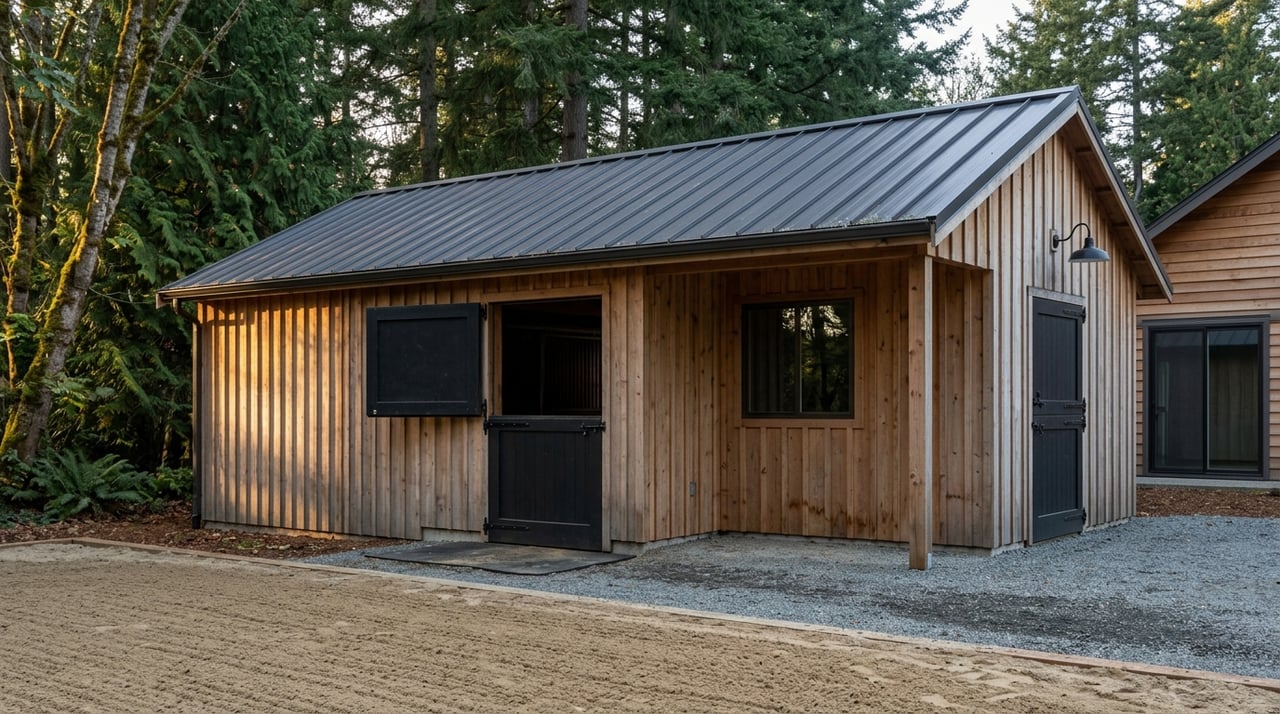
In Bridle Trails, an equestrian-style property usually means more than a large lot. You are generally looking for enough land, the right zoning, and space for horse-related features like a barn or stable, paddock or pasture, fencing, and a workable manure-management setup.
Bellevue classifies horses as large domestic animals. Under Bellevue’s land use code, horse keeping generally requires a minimum lot size of 20,000 square feet, allows one large domestic animal per 10,000 square feet, and requires 25-foot setbacks from property lines for animal facilities.
Kirkland handles horse keeping differently. The city says two horses are allowed on qualifying RS35 or RSX35 Bridle Trails lots, and larger lots may allow additional horses if there is enough extra paddock area. Kirkland also notes that lots under 35,000 square feet require a land use permit and that horses must have a suitable, well-maintained barn.
One of the first things you should confirm is whether the property falls in Bellevue or Kirkland. Bridle Trails spans more than one jurisdiction, and the rules are not identical.
That difference can affect how many horses may be allowed, whether a permit is needed, and whether an existing barn or paddock setup complies with current standards. Before you make assumptions based on a listing description, verify the lot size, zoning, permit history, and any existing animal structures.
Bridle Trails State Park is a big part of what makes this area special. Washington State Parks describes it as a day-use equestrian park between Kirkland and Redmond with 28 miles of maintained trails, four horse arenas, and horse-trailer parking.
The park also has trail rules that shape daily life nearby. Horses have the right-of-way on trails, leashed dogs are allowed, and bicycles and motorized vehicles are not permitted on the trails.
If you have horses, this access can be a major benefit. If you do not, it is still worth thinking about how a horse-first trail system fits your household’s routines, especially if you have dogs or young children.
Buying in Bridle Trails often means buying into a land-management lifestyle. This is not the same as owning a compact-lot home in a more typical Eastside subdivision.
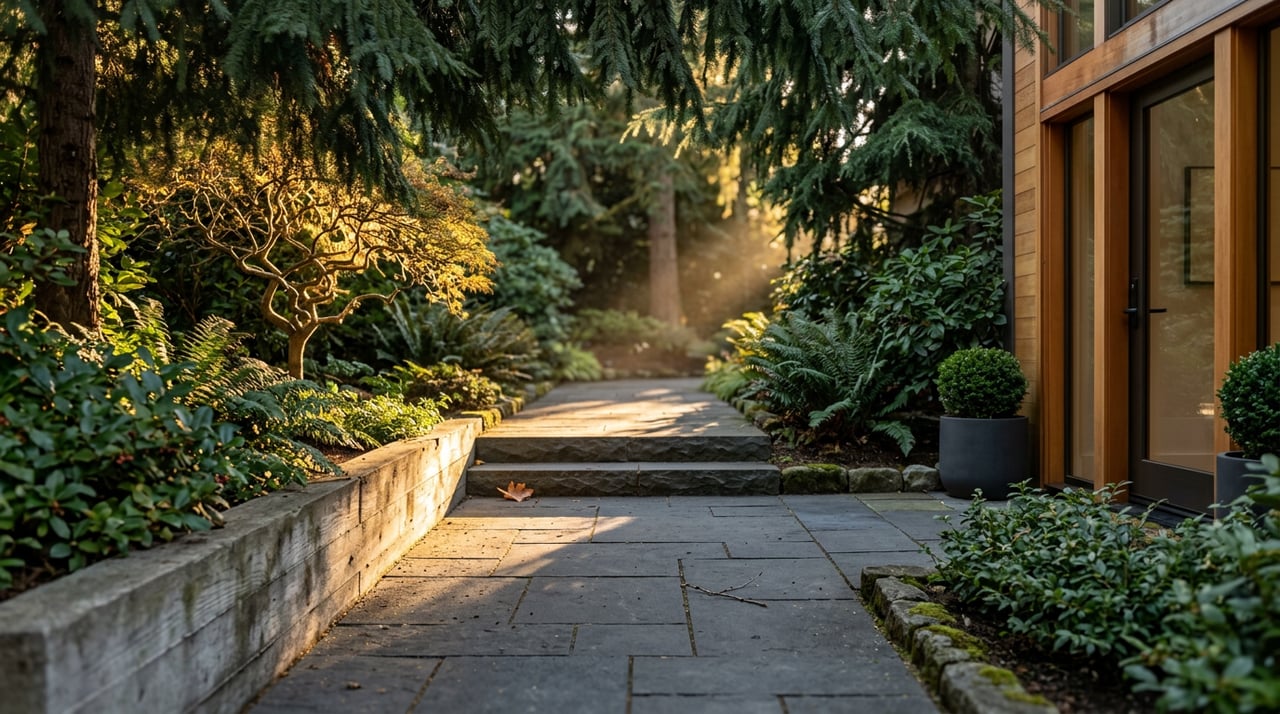
Bellevue says nearly two-thirds of the area is covered by second-growth timber, and local planning policies emphasize tree protection, stream corridors, vegetation, and minimizing impervious surface in environmentally sensitive areas. In practical terms, you should expect more ongoing attention to drainage, trees, and site conditions than you might in a standard suburban neighborhood.
That can include monitoring how water moves across the property, maintaining usable outdoor areas, and understanding how natural features affect improvements. For many buyers, that privacy and greenery are exactly the appeal, but it helps to go in with clear expectations.
Horse keeping comes with responsibilities beyond barns and fencing. Bellevue has noted that Bridle Trails includes about 300 properties where horses are stabled, and the city has emphasized the importance of protecting nearby stream water quality.
King Conservation District recommends regular manure collection and says composted manure is preferable to raw manure. Better manure handling can help reduce runoff risk, which is especially important in an area with sensitive natural systems.
If you are new to horse property, this is one of the most important mindset shifts. You are not just buying space for animals. You are also taking on an ongoing care routine that affects the property itself and the surrounding environment.
Some buyers hope to keep personal horses and create a small boarding setup later. In Bellevue, that requires careful review because the city treats commercial stable or riding academy uses as conditional uses rather than casual by-right residential uses.
That is an important distinction. A property that works for personal horse keeping may not automatically work for a more commercial arrangement.
If your goal goes beyond private residential use, you will want to confirm what is actually permitted before you move forward. This is one of the clearest areas where a detailed pre-offer review can save you time and money.
Bridle Trails does not behave like a uniform Eastside subdivision. The housing stock is varied, and that affects both pricing and buyer demand.
As of March 2026, Realtor.com shows Bridle Trails with a median listing price of $1.0 million, median days on market of 47, a sale-to-list ratio of 100%, and a median price per square foot of $520. By comparison, Redfin’s citywide March 2026 medians were $1.5 million in Bellevue and $1.375 million in Kirkland, with average days on market of 8 and 13 days respectively.
Those figures are not a perfect apples-to-apples comparison because the Bridle Trails number is listing-based while the city figures are sale-based. Even so, the data suggests Bridle Trails may trade below broader Bellevue and Kirkland headline medians.
A big reason is product mix. Under the Bridle Trails name, you can find detached horse properties, larger wooded lots, and attached housing, all with different buyer pools and pricing patterns.
Bridle Trails may be a strong fit if you want privacy, land utility, trail access, and the option to keep horses under the right zoning. It can also appeal to buyers who simply want a more wooded, low-density setting that feels different from denser Eastside neighborhoods.
It may be a weaker fit if your top priority is low-maintenance living. The more natural the setting, the more likely you are to deal with upkeep that goes beyond routine yard care.
The key question is not just whether the neighborhood is appealing. It is whether the specific property matches the way you plan to live.
Before you write an offer on a Bridle Trails property, make sure you can answer these practical questions:
These questions can help you separate a property that looks the part from one that truly supports your goals.
Bridle Trails offers something hard to find on the Eastside: a neighborhood where horses, trails, trees, and residential living still intersect in a meaningful way. But the right purchase here depends on more than charm or curb appeal.
You need to understand the lot, the city rules, the existing improvements, and the day-to-day realities of caring for a more natural property. When those pieces line up, Bridle Trails can be an exceptional fit for the right buyer.
If you are considering a home in Bridle Trails and want thoughtful, local guidance on how a property fits your goals, Michael Nix can help you evaluate the details with a clear, client-first approach.
Stay up to date on the latest real estate trends.
Whether it is an investment in your first home, a luxury property, or an addition to your real estate portfolio, Michael provides a high degree of customized hospitality and professionalism to every client. His world-class service takes many forms and he treats every transaction as its own unique entity.