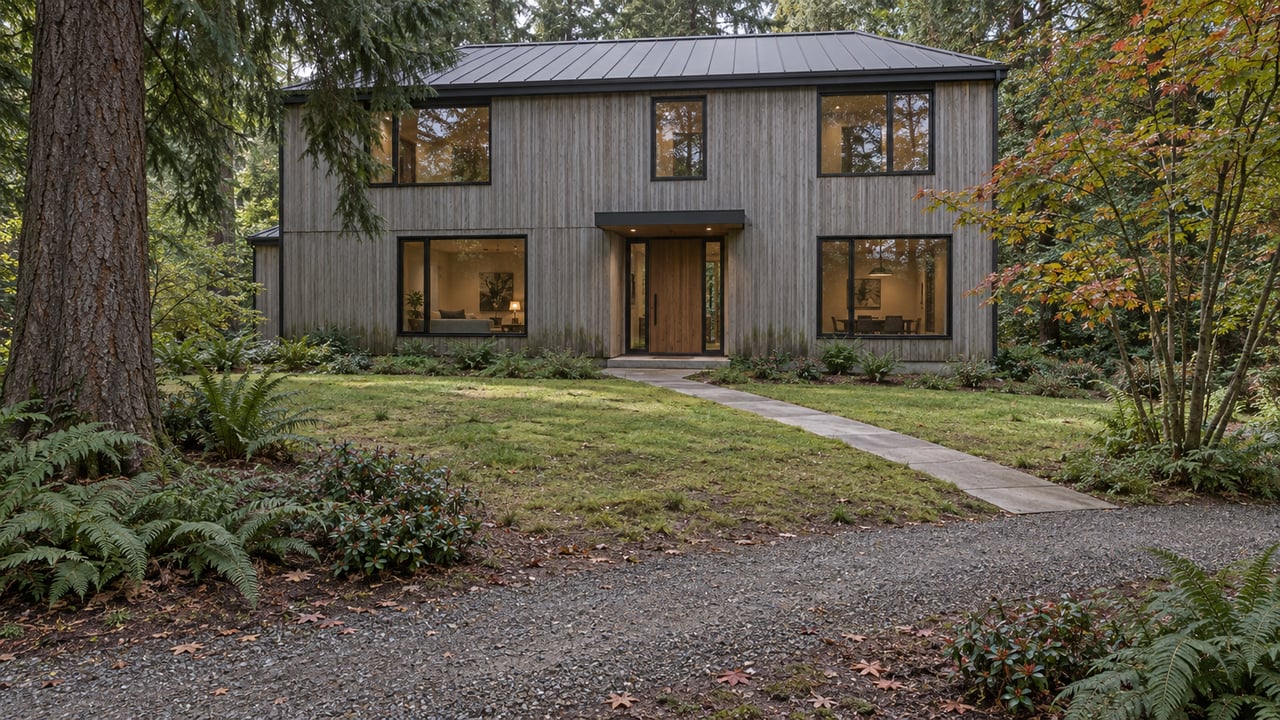
Bridle Trails Has One Traffic Law, and It Belongs to the Horses
On a weekday afternoon at the main trailhead off 116th Avenue Northeast in Kirkland, a two-horse trailer backs into one of the pull-through spaces built for exactly this maneuver. A rider unloads, checks the girth, and walks the horse toward the show grounds near the arenas. A runner who arrived a few minutes earlier stops at the junction and stands off to the side until horse and rider clear the gravel and turn onto Coyote Trail. Nobody honks. Nobody argues. This is just how the intersection works here.
Washington State Parks spells the rule out plainly for Bridle Trails State Park: horses always have the right of way on the trails, and hikers and runners are expected to stop, stand aside, and avoid any sudden movement that might spook a horse. Dogs are welcome, but only on leash, because with the volume of horse traffic passing through, an off-leash dog is a real risk to horse and rider alike. It is an inversion of how almost every other Eastside trail or street works, and it is not a suggestion. It is the governing rule of roughly 480 forested acres sitting between Bellevue and Kirkland.
That one rule does more than dictate trail manners. It shapes how a winter race schedules its laps, why the city just built an entirely separate park a few blocks away with none of these restrictions, and why a volunteer club has spent nearly five decades making sure the rule stays written into city policy rather than just trailhead signage.
The specifics, pulled from the park's own posted guidance and the Bridle Trails Park Foundation, come down to a short list:
That last point catches people off guard more than the horse rule does. The lot fills fast on weekends when one of the park's four horse arenas has a show scheduled, and there is no day-use fee booth, just the pass requirement and a ranger who will check.
The park's 28 miles of trail are anchored by three marked loops that start from the same central junction near the parking area.
| Loop | Distance | Character |
|---|---|---|
| Raven Trail | About 1.2 miles | Shortest of the three, closest to the main junction |
| Trillium Trail | About 1.7 to 1.9 miles | Interpretive signage, named for the spring wildflower |
| Coyote Trail | About 3.5 to 3.7 miles | Traces the park's perimeter, closest to 405 traffic noise on the east side |
Hikers following Washington Trails Association's guidance are told to work the loops clockwise so the trail markers face them as they walk. That is a sign-reading convention. Separately, and less obviously, trip reports from regular visitors note that the park itself recommends clockwise travel on some routes and counter-clockwise on others specifically to manage where horse traffic concentrates through the day. The two conventions overlap on Raven and Trillium but not always on Coyote, which is one more reason regulars tend to default to clockwise unless they know a show is running that afternoon.
A few blocks south, along 140th Avenue Northeast just past the Bellevue Golf Course, the city opened Bridle Trails Valley Creek Park in spring 2025 after nine years in planning and construction. It is 1.65 acres, small next to the state park's 480, and it was built with zero equestrian considerations. No arenas, no trailer parking, no right-of-way signage. Its east corner abuts five acres of protected wetland that will stay undeveloped, and a loop trail restored with native plants wraps around it.
At the grand opening, Bellevue Parks and Community Services director Michael Shiosaki told ParentMap the design goal was "a mix of challenges, both for little children and youth that's a little older, and of course, lots of natural elements to blend with the nature that's part of Bridle Trails." Mayor Lynne Robinson framed it as preserving wetland habitat while keeping the area accessible to the wider community. Neither comment mentions horses, because this particular half-acre of Bridle Trails was designed around a different premise: play structures, a picnic shelter, and a wetland loop that any resident can use without checking which direction the show traffic is moving.
The neighborhood now runs on two parallel outdoor rule sets within walking distance of each other, one built around a 1950s equestrian tradition and one built last year around toddlers and wetland ecology.
The Bridle Trails Community Club has advocated for the neighborhood since 1978, and its stated mission is to protect and preserve what it calls the area's existing residential and equestrian character. As the club approaches its 50th year, it has said publicly that fewer members are stepping into leadership roles or paying annual dues, even as it argues the need for advocacy is as strong as ever given the pace of change across Bellevue.
That advocacy shows up in specifics. The city's 2026 Neighborhood Enhancement Program cycle for Bridle Trails started with 176 resident-submitted project ideas in January 2025, narrowed to 14 ballot items, and drew 388 residents to vote. The four winning projects, funded from a $445,000 budget and rolled out between 2026 and 2031, include new gateway signage at four entrance points meant to reinforce the neighborhood's identity, expected to finish by the end of this year, and a forest health restoration project at Viewpoint Park that will strip out English ivy and Himalayan blackberry and replant natives through 2030. None of these projects touch the state park directly, but they are the mechanism by which a neighborhood without its own city government keeps its character intact through Bellevue's growth planning process. The horse rule survives at the trailhead because someone keeps showing up to the ballot that funds the signage and the streambank work around it.
Every January, on the second Saturday of the year, the same trailhead turns into a start line. The Bridle Trails Winter Running Festival, produced by Northwest Trail Runs and Seattle Running Club, offers 5, 10, and 15-mile distances plus 50K solo, pair, and relay formats, all run on a 5.2-mile loop that combines Raven and Coyote and moves mostly clockwise around the park's perimeter. Runners still need a Discover Pass to park, and race organizers still route the course around the same clockwise convention regulars use to manage horse traffic, just at a much larger scale for one day a year.
As of mid-September, Washington State Parks has Bridle Trails posted under a Level 2 or 3 burn ban along with the rest of the system, a reminder that cooler weather does not mean the dry season is over. Wood fires are restricted to designated pits, gas and propane are allowed, and charcoal may be restricted depending on conditions. It is a small seasonal detail, but it is the kind of thing that changes week to week and is worth checking before anyone plans an outing around the show grounds picnic area.
The rule that governs the park's 28 miles has not changed in decades. What has changed around it is everything else, a wetland playground with no horses in its design brief, a volunteer club recruiting new members to keep the character it protects funded through this year's city ballots, and a race that still bends its course to the same traffic pattern a lone rider follows on a Tuesday afternoon.
If you are weighing what a Bridle Trails address actually means day to day, beyond the trail map, Michael Nix is happy to walk through it with you.
Stay up to date on the latest real estate trends.
Whether it is an investment in your first home, a luxury property, or an addition to your real estate portfolio, Michael provides a high degree of customized hospitality and professionalism to every client. His world-class service takes many forms and he treats every transaction as its own unique entity.