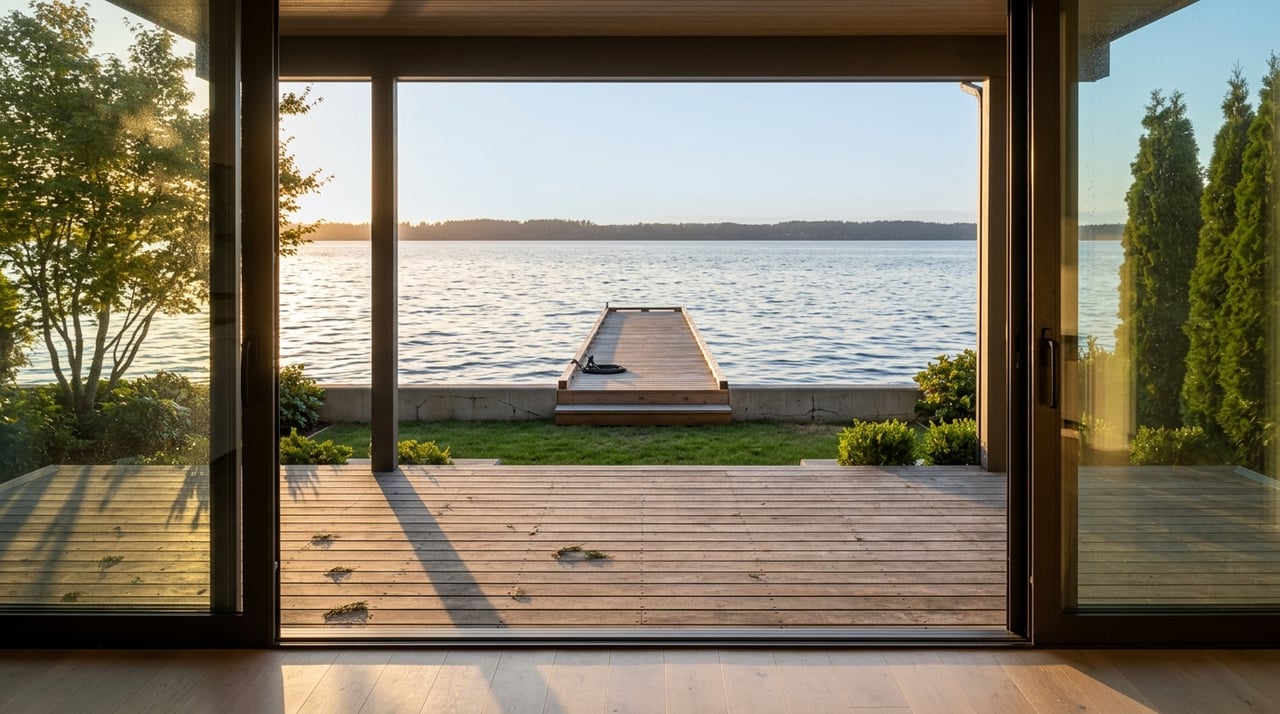
Kirkland Waterfront Living Guide: Find Your Best Fit
If you picture waterfront living in Kirkland as one long stretch of docks, beaches, and postcard views, the reality is more interesting. Life along Lake Washington can feel lively and social, calm and nature-focused, or easy and urban depending on where you land. If you are thinking about buying near the water, this guide will help you understand what day-to-day life really feels like in Kirkland. Let’s dive in.
Kirkland’s shoreline is not one uniform experience. The city’s western edge follows about 9.5 miles of Lake Washington shoreline, and the shoreline plan describes it as a collection of varied neighborhoods and business districts with distinct character.
That matters when you picture your life there. Some parts feel more residential and quiet, especially north of the Central Business District where single-family uses are more common. Other parts feel denser and more active, especially south of downtown and near mixed-use areas where commercial and multifamily development are more concentrated.
Kirkland also treats the shoreline as part of its identity, not just a backdrop. The city says lake views help define Kirkland’s sense of place, and waterfront parks are places where people gather and interact. In practical terms, that means the lake shapes daily life even if you do not own waterfront property.
In Kirkland, waterfront living is often less about special occasions and more about your everyday rhythm. You are likely to notice how often your routines naturally connect to trails, parks, and quick outings near the lake.
The Cross Kirkland Corridor is a big part of that pattern. The city describes it as a 5.75-mile transportation and recreation corridor through the heart of Kirkland, with an interim crushed gravel trail running from South Kirkland Park & Ride through the Totem Lake Business District. Even though it is not all directly on the waterfront, it supports the kind of walkable, bike-friendly lifestyle many buyers want when they imagine living near the lake.
Kirkland also offers neighborhood walking maps, which says a lot about how locals use the city. This is a place where a short walk, a casual bike ride, or a stop at a nearby park can become part of your normal week.
If there is one place that captures the social side of Kirkland’s waterfront, it is Marina Park. It sits downtown near restaurants and shops, and it combines lake access with a strong community feel.
The park includes a sandy beach, public art, an open-air pavilion, a dock, a public boat launch, and 82 uncovered moorage slips available year-round. It also hosts summer concerts and the city’s July 4th Celebration, which makes it feel more like a gathering place than a quiet shoreline retreat.
That is an important distinction. Marina Park is not mainly a supervised swim beach. It is more of a launch point, event space, and place to sit near the water while the city moves around you.
If your idea of waterfront living includes beach days, Waverly Beach Park and Juanita Beach Park are the clearest examples in Kirkland. These are the places where lake life feels the most playful and seasonal.
Waverly Beach Park includes a playground, restroom, picnic areas, a swimming beach with a dock, and personal watercraft launch access. The swimming beach has lifeguards during the summer, and the water is tested weekly by King County.
Juanita Beach Park offers 1,000 feet of Lake Washington shoreline, a walking path, picnic shelters, and a seasonal swimming area. During the summer, it also hosts the Juanita Friday Market, which adds another social layer to the waterfront experience.
There is also a practical side to know. Because water quality is tested weekly, occasional closures can happen when bacteria levels are high. So yes, waterfront living in Kirkland has a strong summer dimension, but it also comes with real-world seasonal changes.
Not every part of Kirkland’s waterfront is built around swimming, boating, or dining. Some of it is intentionally quiet.
Juanita Bay Park offers a very different mood from the beach parks and downtown waterfront. The city describes it as a place with abundant flora and fauna, interpretive and wildlife-viewing features, and views of Forbes Creek Wetland, Juanita Beach, and Juanita Bay.
This part of the shoreline feels slower and more observational. The surrounding waters are a protected wildlife habitat area, and swimming and boating access are not allowed. If you want your waterfront life to include boardwalk walks, birdwatching, and a stronger connection to natural systems, this side of Kirkland may feel especially appealing.
Even if you never plan to keep a boat, boating culture still shapes the feel of waterfront living in Kirkland. The city’s shoreline plan notes that Kirkland has one public marina and several private marinas, including Carillon Point Marina, Yarrow Bay Marina, and Kirkland Homeport Marina.
That helps explain why the shoreline often feels active in subtle ways. You may see boats coming and going, paddleboards launching, or people gathering near docks and moorage areas.
For many residents, that is part of the appeal. The water does not just provide views. It creates motion, activity, and a sense that the shoreline is being used and enjoyed throughout the year.
If you are considering a condo or other multifamily home near the water, your day-to-day life may feel more urban than suburban. Kirkland says its historic downtown includes mixed-use commercial areas along with medium- and high-density residential development, with a broader goal of supporting a walkable, compact, pedestrian- and transit-oriented area.
That usually means easier access to restaurants, shops, waterfront events, and spontaneous outings. It can also mean lower-maintenance living compared with a detached home, especially for buyers who want the lake nearby without the demands of a larger property.
The city also defines multifamily housing broadly to include buildings with three or more units, including condominium units, and mixed-use buildings that combine residential and non-residential uses. In lifestyle terms, that often translates to being more plugged into the social energy of the waterfront.
Single-family living along or near the waterfront tends to feel different. Much of Kirkland’s remaining shoreline is already developed with single-family residential uses, and the city notes that this pattern is especially common north of the Central Business District.
For you, that may mean a quieter pace, more privacy, and a stronger separation from the busier public waterfront spaces. You can still be close to parks, beaches, and shoreline access, but your daily environment may feel more residential than event-driven.
There is also a middle ground. Kirkland’s planning materials note that middle housing includes townhouses, duplexes, triplexes, accessory dwelling units, cottages, and stacked flats, and that townhomes can offer a living experience similar to single-family homes. For buyers who want a residential feel without going fully detached, that can be a useful option to explore.
One of the biggest surprises for buyers is that waterfront living here is not only about private frontage. Kirkland’s Shoreline Master Program places strong emphasis on public access, natural resource protection, and water-dependent uses.
The city explains that public access can mean physical access, like trails, or visual access, like view corridors. So in Kirkland, the waterfront experience often includes seeing and reaching the lake even when you do not live directly on the shoreline.
At the same time, both public access and private property rights are recognized. The city supports shoreline access but does not allow trespass across privately owned uplands. That balance is part of what makes the waterfront feel both shared and clearly defined.
The lake can add beauty and lifestyle value, but it can also add complexity. Kirkland’s Shoreline Master Program applies within 200 feet of Lake Washington’s ordinary high water mark and also affects wetlands connected to Juanita Bay and Yarrow Bay.
The rules can apply to new development and to expansions or alterations of existing uses. That includes work involving houses, decks, clearing, grading, shoreline improvements, trails, and public access.
For buyers, that means a waterfront or near-shoreline property should be evaluated with care. The lifestyle may be exceptional, but the property itself may come with permitting considerations and environmental protections that are different from an inland home.
One of the most accurate ways to describe Kirkland waterfront living is that it changes with the calendar. Summer brings swim beaches with lifeguards, outdoor events, and seasonal market activity.
The Kirkland Downtown Association says its events are designed to bring people downtown to enjoy restaurants, cafes, galleries, and the waterfront, and its Wednesday Market is held at Marina Park during the summer. The city also highlights summer concerts and the July 4th Celebration at Marina Park.
That seasonal energy gives the waterfront a strong community feel. In warmer months, the shoreline becomes one of the city’s main social stages. At other times of year, it can feel calmer, more reflective, and more tied to walking, views, and everyday routines.
In Kirkland, waterfront living is less about one luxury stereotype and more about fit. It can feel active and connected, peaceful and nature-focused, or polished and low-maintenance depending on the housing type and shoreline segment you choose.
That is what makes the area so appealing to different kinds of buyers. You are not just choosing a home near the water. You are choosing the version of lake life that matches how you actually want to live.
If you are exploring waterfront, view, or near-water homes in Kirkland, working with a local advisor can help you look past the photos and understand the day-to-day experience. If you want thoughtful guidance on how different parts of Kirkland live, connect with Michael Nix.
Stay up to date on the latest real estate trends.



Whether it is an investment in your first home, a luxury property, or an addition to your real estate portfolio, Michael provides a high degree of customized hospitality and professionalism to every client. His world-class service takes many forms and he treats every transaction as its own unique entity.