Why Redmond Light Rail Home Prices Haven't Jumped
On March 28, 2026, a train pulled out of Downtown Redmond Station, crossed Lake Washington on the Homer M. Hadley floating bridge, and rolled into Seattle's International District/Chinatown station 41 minutes later. It was the first light rail service anywhere in the world to cross a floating bridge, and for anyone who has spent years treating SR 520 and I-90 as a daily coin flip, it was the moment Redmond's connection to Seattle stopped being a promise on a Sound Transit map and became something you could actually ride.
If you've been watching Redmond home prices for a sign that this changed anything, you're still waiting. Through the three months ending in May 2026, Redmond's median sale price sat at $1.3 million, essentially flat against the same period a year earlier. Price per square foot came in at $671, down almost a full percentage point year over year. Separate tracking from Zillow, current as of August 2026, puts the average home value even lower, down 4.1% over the past twelve months. None of that reads like a city that just opened a direct rail line to downtown Seattle.
That gap is not a sign the light rail failed to matter. It's a sign that a single citywide number is doing a poor job of describing a market that is behaving very differently depending on where, exactly, you're standing.
The instinct when a transit line opens is to expect a broad lift in nearby home values. National research on transit access, the kind cited in property management industry reports, suggests homes within a ten-minute walk of a station can sell for 8 to 12% more than comparable homes farther out. That's a real pattern, but it's a national average built from dozens of cities and station types, and Redmond's own numbers this year are moving the opposite direction of what that pattern would predict.
Homes are also taking longer to sell. Redfin's tracking shows Redmond properties averaging 12 days on market in the months around May 2026, compared to just 5 days over the same window a year earlier. Sold volume dropped too, from 220 homes in May 2025 to 161 in May 2026. A market that just gained a rail connection to Seattle is, by these measures, moving slower and selling for less than it was a year ago.
The honest read isn't that the light rail didn't matter. It's that the citywide median is blending together properties that had almost nothing to gain from the Crosslake Connection with the small number that had a great deal to gain, and the losers in that blend currently outnumber the winners.
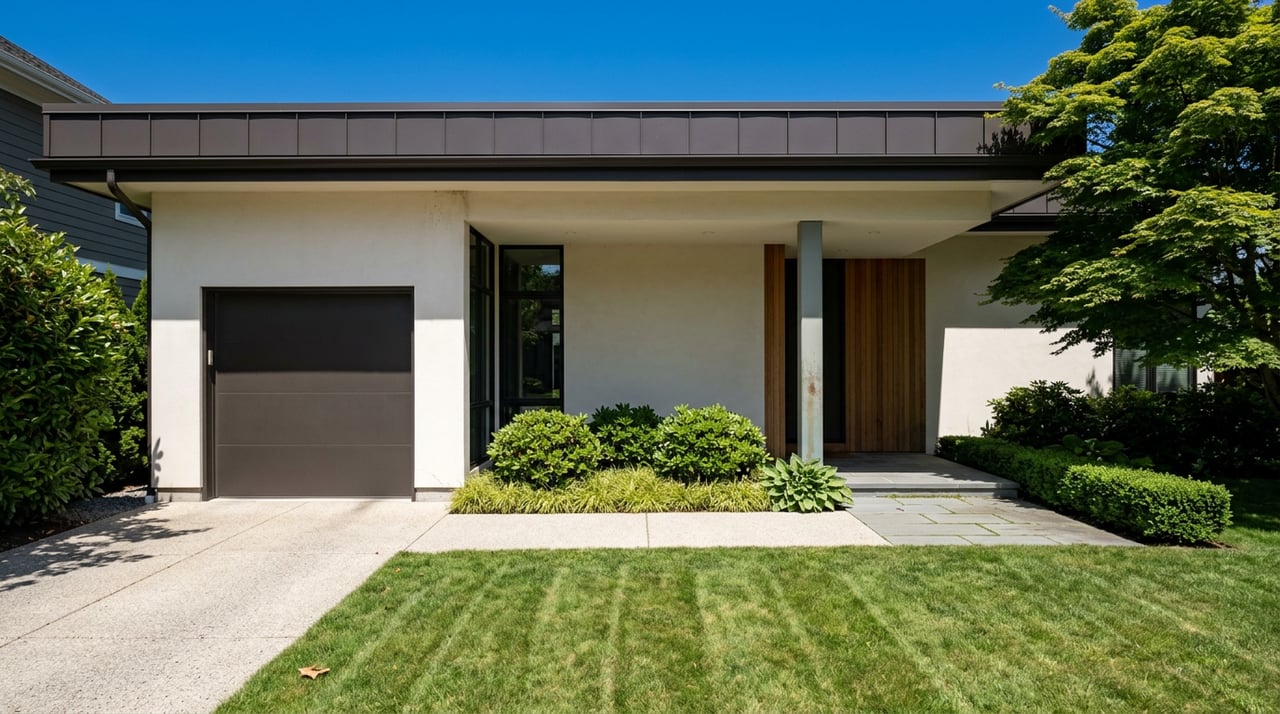
Redmond's housing stock isn't uniform, and that matters more this year than most. Newer construction in Overlake and Education Hill has been trading between $1.1 million and $1.8 million, a range that reflects both the premium buyers pay for new builds and the fact that these pockets sit closer to the employment and transit corridor Microsoft and the surrounding tech campuses have built up. Older housing stock nearer historic downtown Redmond, meanwhile, offers a noticeably lower entry point, and Redmond has added more new construction over the past several years than most other Eastside cities, which means buyers comparing listings here are often comparing two different products rather than two versions of the same one.
That split explains a lot about why the citywide median looks soft even as the transit story looks strong. If new construction near the rail corridor is holding value while a larger pool of older, non-station-adjacent homes is softening under higher rates and more competition, the blended median can sit flat or even decline while the addresses that actually matter for a light rail thesis are quietly doing fine. A citywide average has no way to show you that. Only looking at the specific quarter mile around a listing does.
Here's the detail that gets lost in most coverage of the Crosslake Connection, and it's the one that should change how you evaluate any Redmond listing marketed as "near light rail."
Downtown Redmond Station was designed to be experienced on foot or by bike. It sits beside the Redmond Central Connector trail, carries public art meant to be seen up close, and was built into downtown's existing street grid rather than set apart from it. What it does not have is a Sound Transit parking lot. Riders who want to drive to that station are directed instead to the Marymoor Village Station garage, roughly 1.8 miles away, which holds 1,403 general spaces and 31 ADA spaces. Redmond Technology Station, closer to the Microsoft campus, has its own dedicated garage with 323 spaces and 8 ADA stalls.
That distinction matters because it draws a hard line around who can actually use the new connection as part of a daily commute. If a listing sits within easy walking distance of Downtown Redmond Station, the light rail genuinely functions as car-free infrastructure for that household. If a listing is anywhere else in the city, using the train still means driving to a park and ride first, which erodes a meaningful share of the time savings that made the connection newsworthy in the first place. A listing description that says "near light rail" without specifying which station, and whether that station has parking, is not telling you enough to price the amenity accurately.
Transit access is only one variable in this market, and it may not even be the largest one right now. In early 2026, Freddie Mac's national mortgage survey put the average 30-year fixed rate just above 6%, high enough to change the monthly math meaningfully at Redmond's price points. Across Washington, the Northwest Multiple Listing Service reported rising inventory and softer price movement heading into the end of 2025, a regional pattern Redmond sits inside rather than one it invented on its own.
At the same time, absolute supply in the city remained tight by historical standards. Some tracking from early 2026 put months of available inventory below 1.3, well under the five to six months typically considered a balanced market. Those two facts aren't actually a contradiction. Supply can stay tight in absolute terms while still loosening enough at the margin, more new listings, fewer of them closing quickly, to flatten prices even in a market with a genuine structural advantage. That's closer to what Redmond's numbers show this year than any story about the light rail underperforming.
The transit connection is real and it is not going away. But treating "Redmond" as a single market right now will lead you to overpay in some pockets and underestimate value in others. A few things worth checking before you weigh a listing against the citywide numbers:
Will Downtown Redmond Station ever get its own parking? Nothing in current planning documents points to that. The station was built around pedestrian and bike access from the start, so the practical car-free advantage is likely to stay concentrated in its immediate walkshed rather than expand outward.
Is this slowdown specific to Redmond, or is it happening everywhere on the Eastside? It's regional. Northwest MLS data shows the same pattern of rising inventory and softer pricing across King County heading into 2026. Redmond's version of that story just happens to be layered on top of a genuinely new piece of infrastructure, which is what makes the flat numbers worth a second look rather than a shrug.
Ridership on the full 2 Line is still climbing toward Sound Transit's own projections of 43,000 to 52,000 daily riders in 2026, on the way to a systemwide target of 50,000 by 2030. A transit-driven housing effect that hasn't fully shown up yet in a five-month-old data set isn't evidence the effect doesn't exist. It's evidence the ramp is still underway, and that the buyers who understand which pockets of Redmond are actually positioned to capture it have a real window before the rest of the market catches up.
If you're trying to figure out which Redmond listing sits on the right side of that line, or how a specific address compares to what's actually moving in Overlake, Education Hill, or downtown right now, Michael Nix can walk through the current comps with you street by street. Let's Connect.
Stay up to date on the latest real estate trends.
Whether it is an investment in your first home, a luxury property, or an addition to your real estate portfolio, Michael provides a high degree of customized hospitality and professionalism to every client. His world-class service takes many forms and he treats every transaction as its own unique entity.